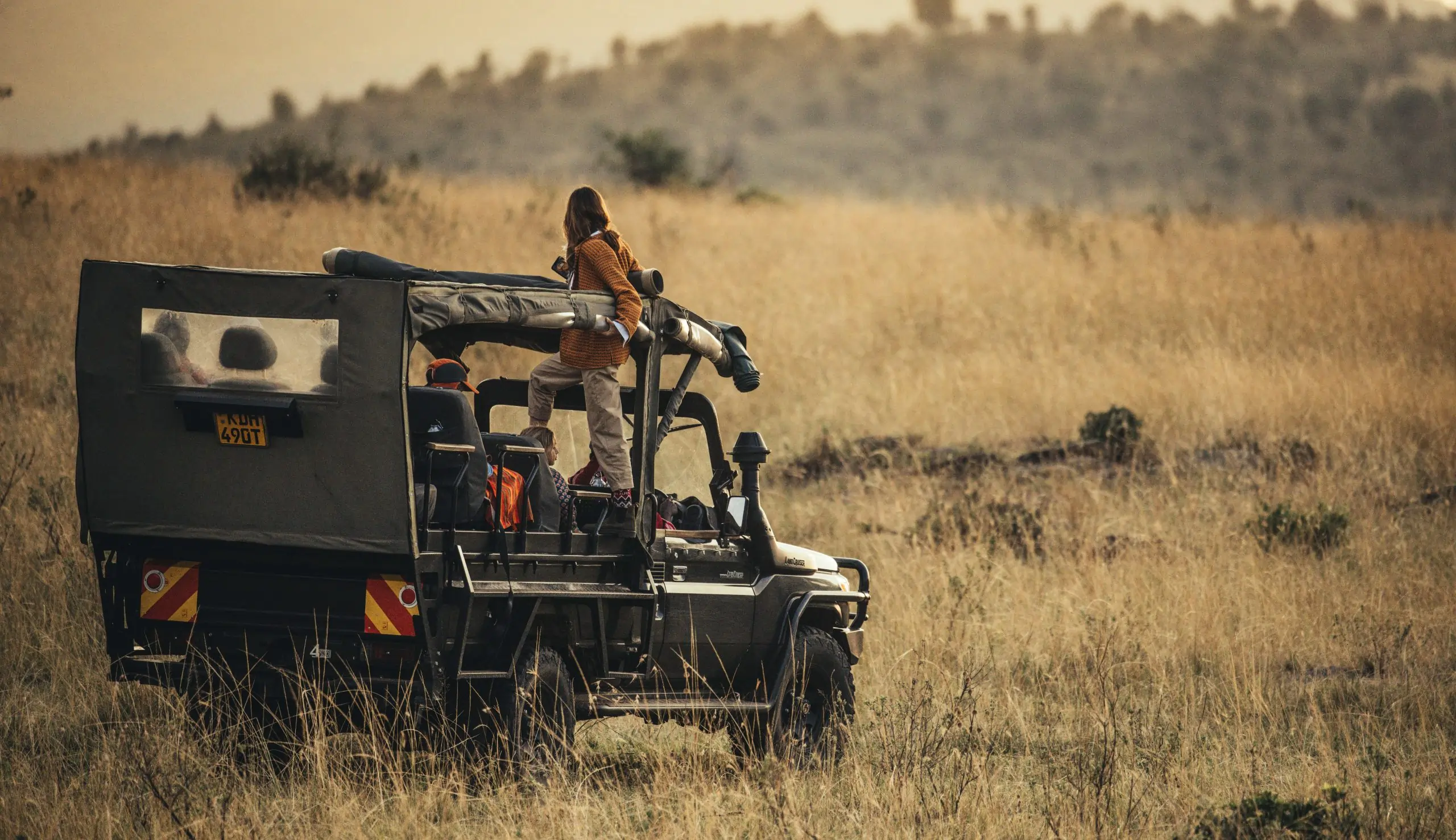
1. Logistics First: Vehicle Coordination is Key
The most critical logistical element of a group safari is transportation. Standard safari vehicles in Kenya—typically 4x4 Land Cruisers or customized minivans—comfortably seat six to seven passengers. Therefore, a group of twenty will require at least three or four vehicles.
The Insider Tip
Never assume that all vehicles will naturally stay together. Dust, different wildlife sightings, and varying driving speeds can easily separate a convoy. When you outsource safari operations in Kenya to a reliable DMC, ensure they utilize VHF/UHF radios for vehicle-to-vehicle communication. Furthermore, the DMC must designate a "Lead Guide" responsible for the convoy's pacing, managing rendezvous points for bush breakfasts, and ensuring the entire group arrives at the lodge simultaneously.
2. Strategic Accommodation Selection
Booking accommodation for a large group requires strategic foresight. Many of the highly sought-after boutique tented camps in the Maasai Mara or Samburu have limited capacity (often only 10 to 15 tents).
The Insider Tip
Book group accommodations 12 to 18 months in advance, especially if traveling during the Great Migration (July to October). If your group size exceeds the capacity of a single boutique camp, you have two options: book out an entire camp for exclusivity (highly recommended for corporate or luxury groups) or utilize larger, well-managed lodges. A knowledgeable Kenya ground handler will advise on which properties have the infrastructure—such as large dining areas and sufficient hot water capacity—to comfortably handle group dynamics without compromising the safari atmosphere.
3. Standardizing the Experience
In a group setting, perceived inequality is the fastest way to generate complaints. If one vehicle sees a leopard kill while another is stuck fixing a flat tire, or if some clients get superior rooms, dissatisfaction will arise.
The Insider Tip
Work with your Kenya B2B tour operator to standardize the experience as much as possible. Implement a vehicle rotation system so clients spend time with different guides and in different seating positions. When negotiating Kenya safari net rates for travel agents, request that the DMC secures rooms of the same category block to avoid "room envy." A professional ground handler understands these psychological dynamics and will manage rooming lists meticulously.
4. Managing Dietary Requirements at Scale
Dietary restrictions are increasingly common, and managing them in remote bush locations requires precise communication between the travel agent, the DMC, and the lodge chefs.
The Insider Tip
Gather all dietary requirements (allergies, vegan, gluten-free, etc.) at the time of booking, not weeks before departure. Your Kenya inbound tour operator must transmit this information to the lodges well in advance, as camps often fly in their supplies weekly. When planning group meals, such as a sundowner or a bush dinner, ensure the DMC provides diverse catering options that accommodate all guests without making anyone feel like an afterthought.
5. Building in "Downtime"
Travel agents often feel pressured to pack every hour of a group itinerary with activities to demonstrate value. However, group travel is inherently slower. Loading and unloading multiple vehicles, coordinating bathroom breaks, and managing group meals take longer than anticipated.
The Insider Tip
Build significant downtime into the itinerary. Avoid overly ambitious schedules that require changing lodges every single day. A two- or three-night stay at a single property, such as a lodge in Amboseli or Lake Nakuru, allows the group to unpack, relax, and enjoy the lodge amenities between game drives. A well-paced itinerary results in happier, more relaxed clients.
The Value of a DMC Partnership
Executing a flawless group safari requires an on-the-ground conductor. By utilizing a DMC for Kenya safaris, you transfer the immense burden of real-time logistical management to local experts.
Crimson Brooke Safaris specializes in group and FIT handling. We provide the meticulous planning, the premium fleet, and the 24/7 on-ground support necessary to protect your agency's reputation and deliver an unforgettable group experience.
Planning a group departure to East Africa?
Contact Crimson Brooke Safaris to discuss our group logistics capabilities and access our competitive trade rates.
Send An Enquiry